
Angel & Islington
10 Barnsbury Road N1 0HB
0203 442 0267

Sciatica Treatment in Angel, Islington
Expert osteopathic diagnosis and treatment for sciatica — relieving shooting leg pain, numbness, and lower back pain with same-week appointments available at our Angel clinic, no GP referral needed.

200+ Five Star Reviews
Same Day/Week Appointment Available
No GP Referral Required
1000+ full recoveries each year
Sciatica is one of the most debilitating pain conditions people experience. The shooting, burning, or electric pain that travels from the lower back through the buttock and down the leg. The numbness or pins and needles that makes it hard to sit, stand, or sleep comfortably. The feeling that almost any position aggravates it.
What makes sciatica particularly frustrating is that it often doesn't respond to the usual approaches — rest, painkillers, and heat — because those things address the symptom, not the cause. The sciatic nerve is being irritated or compressed somewhere along its path, and until that compression is relieved, the symptoms persist.
At Bodyfunction Clinic in Angel, our osteopaths specialise in identifying exactly where and why the sciatic nerve is being affected — and treating that cause directly.
Your first visit
We provide fast, effective pain relief to help you avoid painkillers, prevent surgery, and reduce the risk of future injuries. Here’s what to expect during your first osteopathy appointment:
A thorough assessment of your symptoms
Accurate diagnosis and clear explanation of your condition
Targeted Osteopathic techniques to reduce pain and discomfort right away
A structured exercise programme to kick-start your rehabilitation
A tailored care plan with clear timeframes for a swift recovery
Your results explained in a written report
Health Insurance
Bodyfunction Clinic is recognised by most health insurance companies and all of our osteopaths are GOsC Registered.
Opening hours
Monday - Friday 8am to 7pm
Saturday and Sunday 9am to 5pm
Prices
Osteopathy Assessment & Treatment (45mins) - £80
Follow Up Treatment (30 min) - £65
Extended Treatment (45min) - £90
Extended Treatment (60min) - £115
What Is Sciatica and What Causes It?
The sciatic nerve is the longest nerve in the body, running from the lower back through the buttock, down the back of the leg, and into the foot. When it becomes compressed or irritated — at any point along that path — it produces the characteristic symptoms most people recognise as sciatica.
The two most common causes are fundamentally different and require different treatment approaches:
Disc-related sciatica — a disc in the lumbar spine bulges or herniates and presses directly on the nerve root as it exits the spinal canal. This is the most commonly discussed cause and is typically associated with a specific triggering event — a sudden lift, twist, or prolonged sitting — and symptoms that are often worse when sitting or bending forward.
Piriformis syndrome — the sciatic nerve passes through or directly beneath the piriformis muscle in the deep buttock. When this muscle becomes tight or goes into spasm — through overuse, prolonged sitting, or hip mechanics — it compresses the nerve from the outside. Symptoms can closely mimic disc-related sciatica but the treatment is entirely different.
Other contributing causes include facet joint degeneration, spinal stenosis, sacroiliac joint dysfunction, and in some cases referred pain from the hip. Identifying the correct origin is the most important step in getting the right treatment.
Why Getting the Right Diagnosis Matters
We regularly treat a wide range of spinal and nerve-related conditions.
Treating piriformis syndrome with spinal manipulation won't resolve it. Treating a disc prolapse with deep gluteal massage won't resolve that either. This is why many people with sciatica cycle through treatments without lasting improvement — the therapy didn't match the cause.
At your first appointment our osteopaths use a structured clinical assessment — including specific orthopaedic tests, movement analysis, and neurological screening — to identify the origin of your sciatica before any treatment begins.
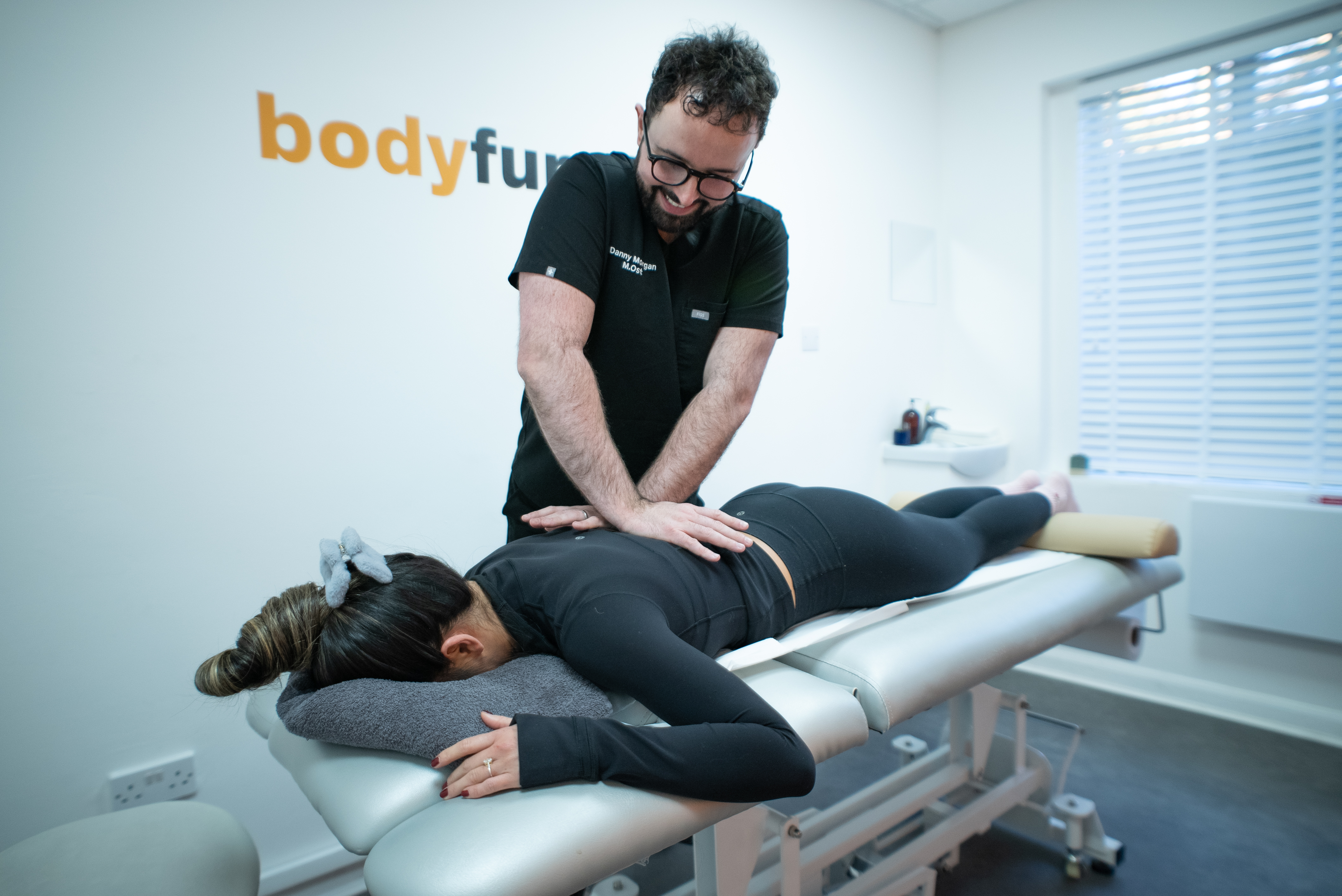
How Our Osteopaths Treat Sciatica
Treatment is directed at the structure causing the nerve compression — and is adjusted session by session based on your response. Depending on your diagnosis this may include:
Spinal joint mobilisation — restoring movement to the lumbar vertebrae and reducing mechanical pressure at the nerve root for disc-related presentations
Soft tissue therapy to the lumbar spine and hip — releasing the muscles and fascia that are loading the spine or compressing the nerve along its course
Piriformis and deep hip rotator release — targeted soft tissue work to the deep buttock muscles for piriformis-related presentations
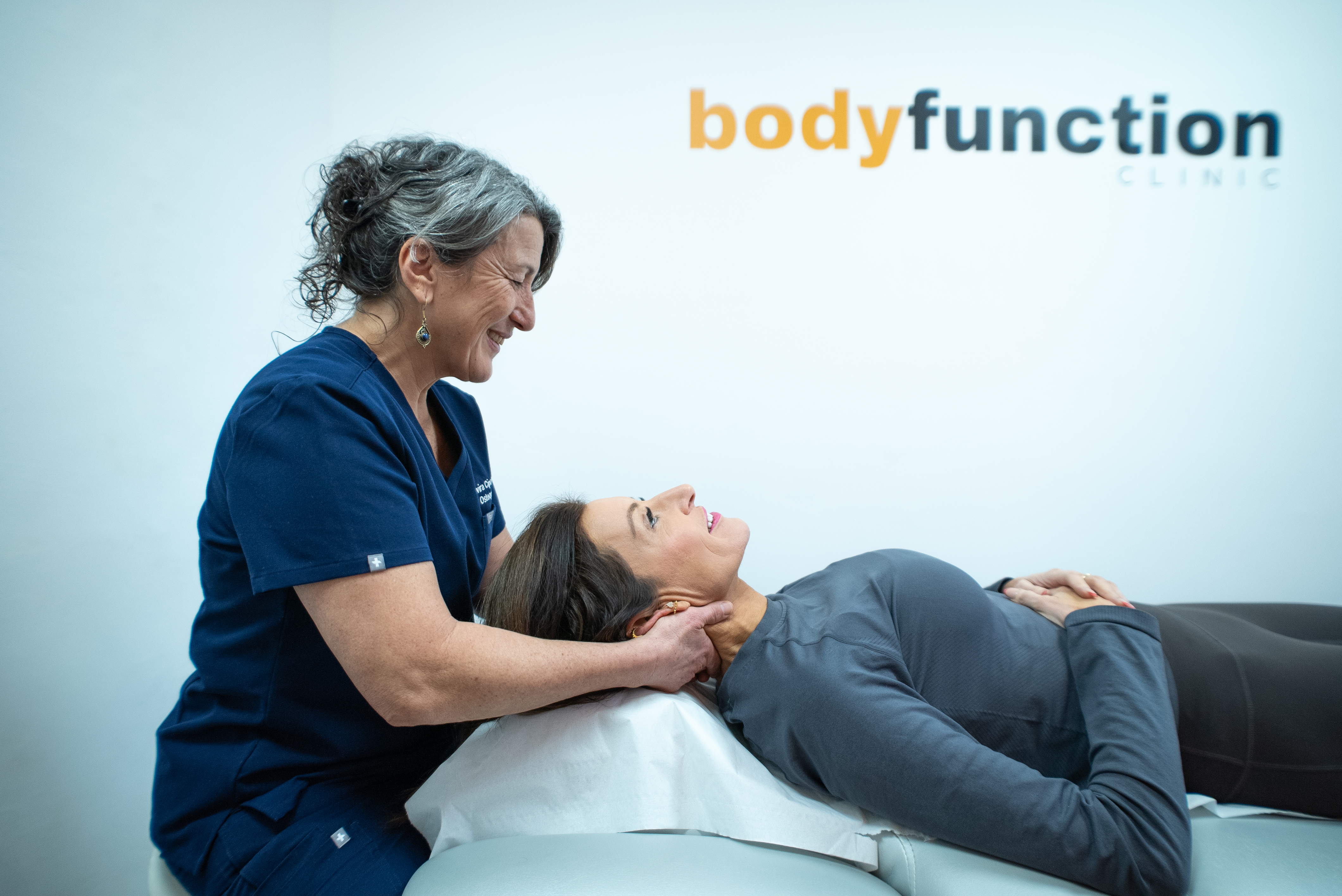
Neural mobilisation (sciatic nerve flossing) — specific techniques that gently mobilise the sciatic nerve through its full path, reducing neural tension and improving nerve glide
Sacroiliac joint treatment — where SIJ dysfunction is contributing to nerve irritation
Dry needling — for deep gluteal and lumbar trigger points maintaining nerve compression or sensitisation
Rehabilitation exercises — a progressive programme to decompress the nerve, stabilise the lumbar spine, and address the movement patterns driving the problem
Postural and ergonomic advice — particularly important for desk workers and drivers where sustained sitting is a major aggravating factor
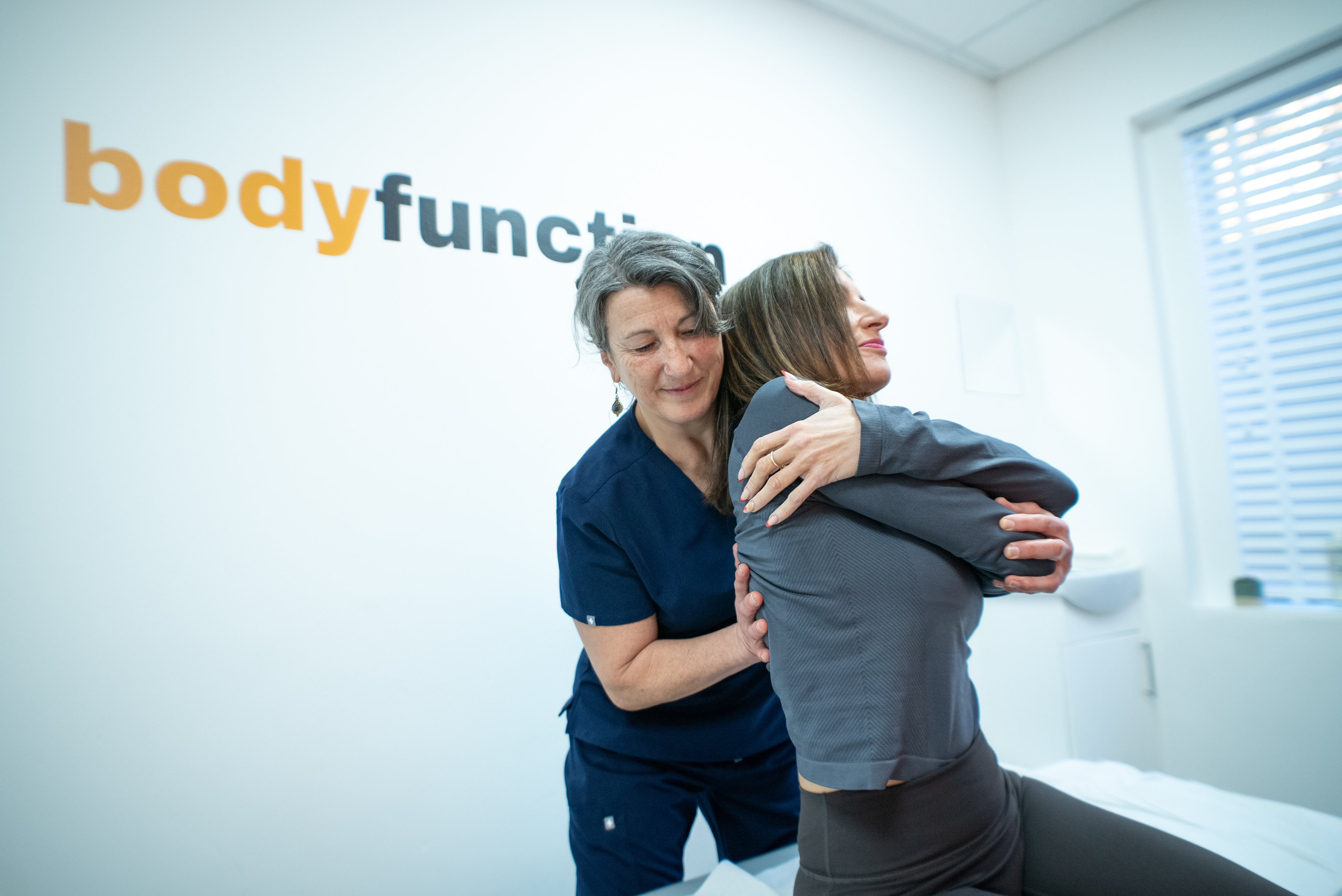
What to Expect From Treatment
Every patient is different, but most people experience:
Noticeable symptom relief within 2–4 sessions
Significant improvement within 4–8 sessions depending on severity
Reduced pain, improved mobility, and better function
Chronic or severe cases may take longer, but we will always give you a clear treatment plan and timeline from your first visit.
You’ll also receive advice and exercises to help prevent the issue from returning.
"I came in with severe lower back pain and shooting pain down my leg. I was worried it was a slipped disc. After a few sessions at Bodyfunction Angel, the pain reduced massively and I could finally move normally again. The team explained everything clearly and gave me exercises that really helped."
R, Robson
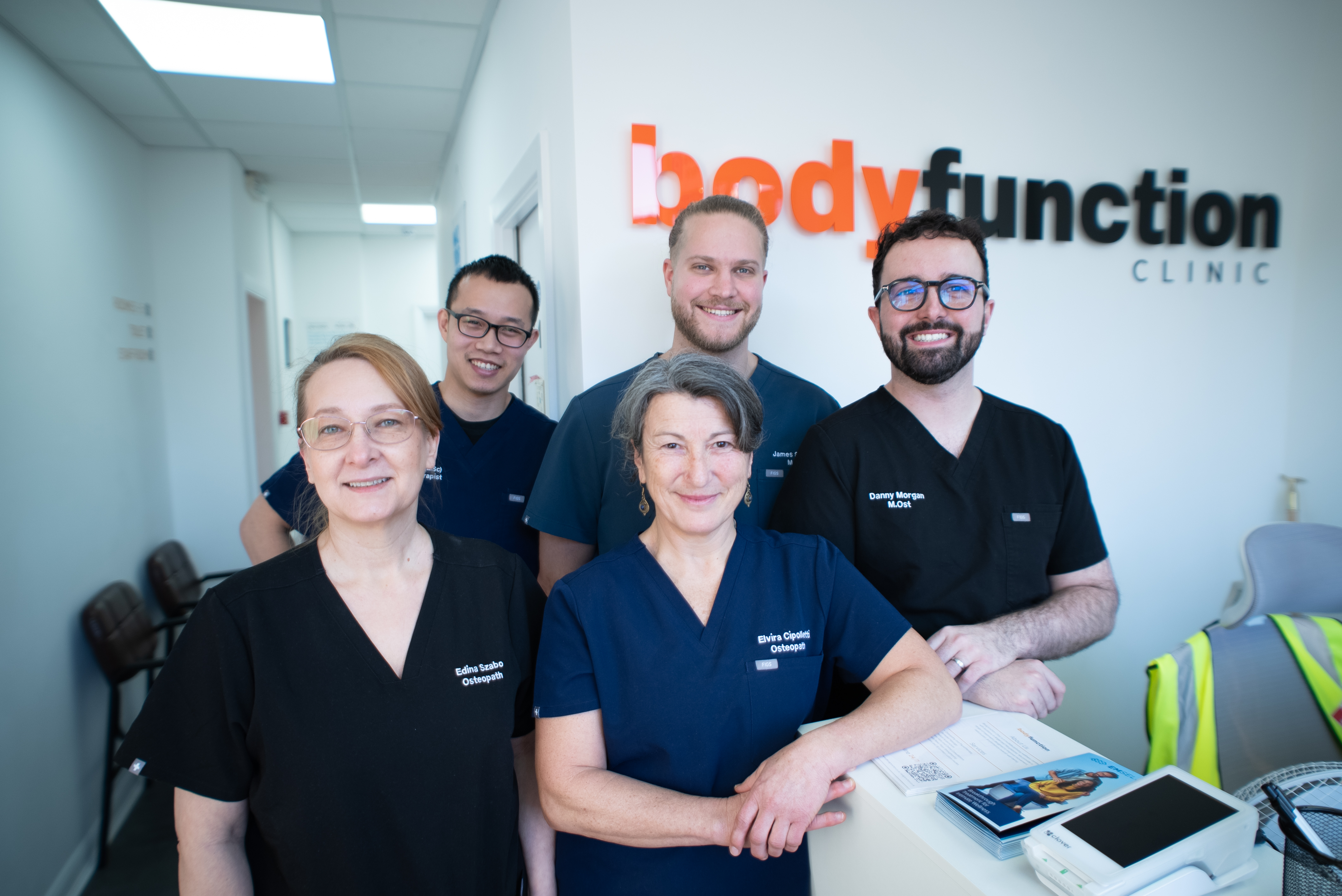
A message from the team
We are super excited to welcome you into our clinic. We believe everyone has the right to a pain-free life and we do everything we can to get you better from the very first appointment.
Every patient is different, so our treatment approach is bespoke to you, ensuring you get the best possible results. There is nothing more we enjoy doing than helping people and hearing that sigh of relief when you start to feel better.
We have supported many patients to achieve a better quality of life and we'd be grateful for the opportunity to help you too!
Fully Registered & Accredited
Experience improved movement and well-being with our top osteopaths and physiotherapists. Our fully licensed experts not only meet professional standards but are also fully insured for your confidence.
Get started by booking your appointment
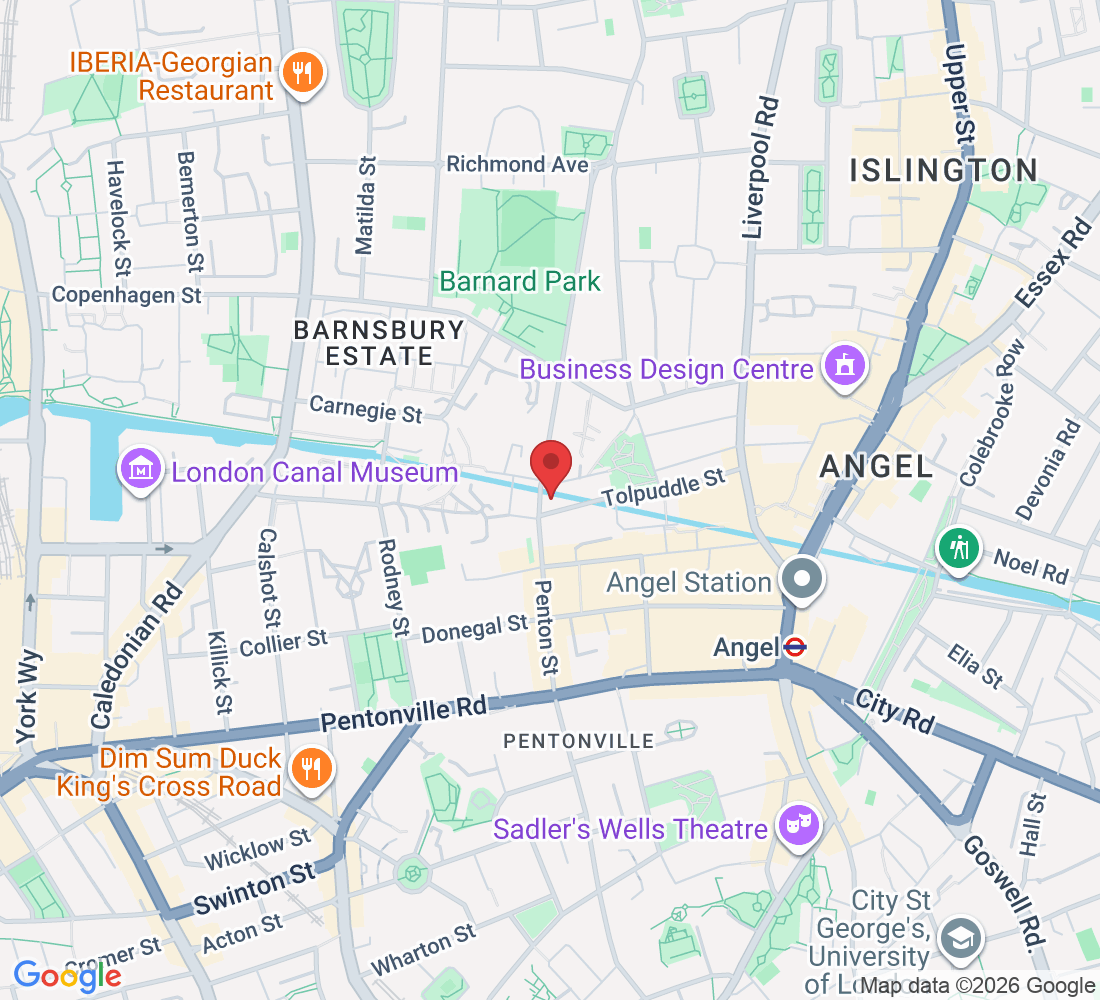
Find Bodyfunction Clinic in Islington
We are based in Angel, Islington (N1), at 10 Barnsbury Road N1 0HB. If you are coming via Upper Street or Angel Station, you are close, and the clinic is an easy walk from the main Angel area.
Nearest station: Angel (Northern line) (6 mins away)
Close to Kings Cross station - (10 mins away)
Typical walk time: around 5–10 minutes (route dependent)
Access: Please use the buzzer on arrival. Step-free access is available to selected treatment rooms.
Parking: controlled parking zone, restrictions vary (check before driving)
Can an osteopath treat sciatica?
Yes — osteopathy is very effective at treating sciatica by reducing pressure on the nerve and improving spinal movement.
Do I need a scan (MRI) before treatment?
In most cases, no. A thorough clinical assessment is usually enough to diagnose and begin treatment safely. If we feel imaging is needed, we will refer you.
How do I know if I have a sciatica?
Common signs include sharp or radiating pain, tingling, numbness, or weakness in the legs. We will assess and confirm this during your consultation.
Is treatment painful?
Treatment is generally comfortable and adapted to your pain levels. Many patients feel relief even after the first session.
Start feeling better today!
Book an appointment now for your full diagnosis, recovery plan and treatment.
Clinic address
10 Barnsbury Road N1 0HB
Opening hours
Monday - Friday 8am to 7pm
Saturday and Sunday 9am to 5pm
Copyright 2026 Bodyfunction Clinic | All Rights Reserved